
Search Washington Criminal Court Records
Washington criminal court records are public documents created when a criminal case is filed in state court. You can find case filings, charges, hearing dates, verdicts, and sentencing information through the statewide Washington Courts case search system or by contacting the clerk at the specific court where the case was heard. The Washington State Patrol also maintains the central criminal history database for the entire state. This guide covers every way to find criminal court records in Washington, from online portals to in-person requests at courthouses across all 39 counties.
Washington Criminal Court Records Overview
What Washington Criminal Court Records Contain
The Washington State Courts website is the central hub for the state's entire court system, connecting users to trial courts, appellate courts, and specialty courts across all 39 counties.
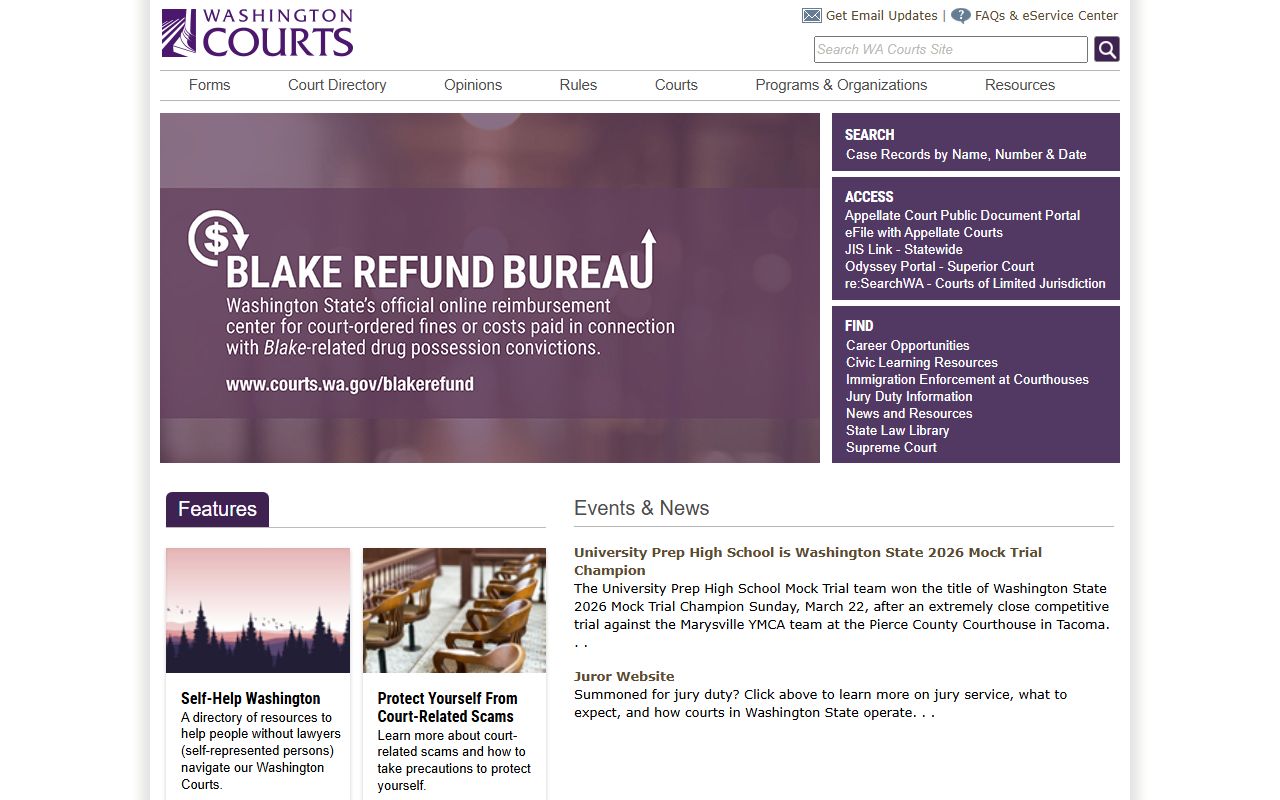
The site includes a full court directory at courts.wa.gov/court_dir with contact information, phone numbers, and addresses for every court level in every county in the state.
Criminal court records in Washington document every step of a criminal case from initial filing through final disposition. A typical file includes arrest warrants, uniform arrest reports, charging documents, case dockets, hearing schedules, plea agreements, jury verdicts, and sentencing orders. Cases that end in conviction contain more detail than those resolved through dismissal or acquittal. The content of any given criminal court record depends on how the case ended.
Washington courts are organized into multiple levels. Superior Courts handle felony criminal matters, civil cases over $75,000, family law, and juvenile proceedings. District Courts and Municipal Courts handle misdemeanors, gross misdemeanors, traffic infractions, and city ordinance violations. The Court of Appeals sits in three divisions: Division I in Seattle, Division II in Tacoma, and Division III in Spokane. The Supreme Court is the state's highest court. Each level maintains its own records and has its own access procedures.
The Administrative Office of the Courts manages the Judicial Information System (JIS-Link), which provides statewide access to case management records for participating courts. Not every court in Washington offers the same level of online access. The type of record you can find online depends on the specific court that handled the case and whether that court uses a compatible case management system.
How to Search Criminal Court Records in Washington
The Washington Courts Case Search portal is the main statewide tool for looking up criminal cases filed in municipal, district, superior, and appellate courts throughout the state.
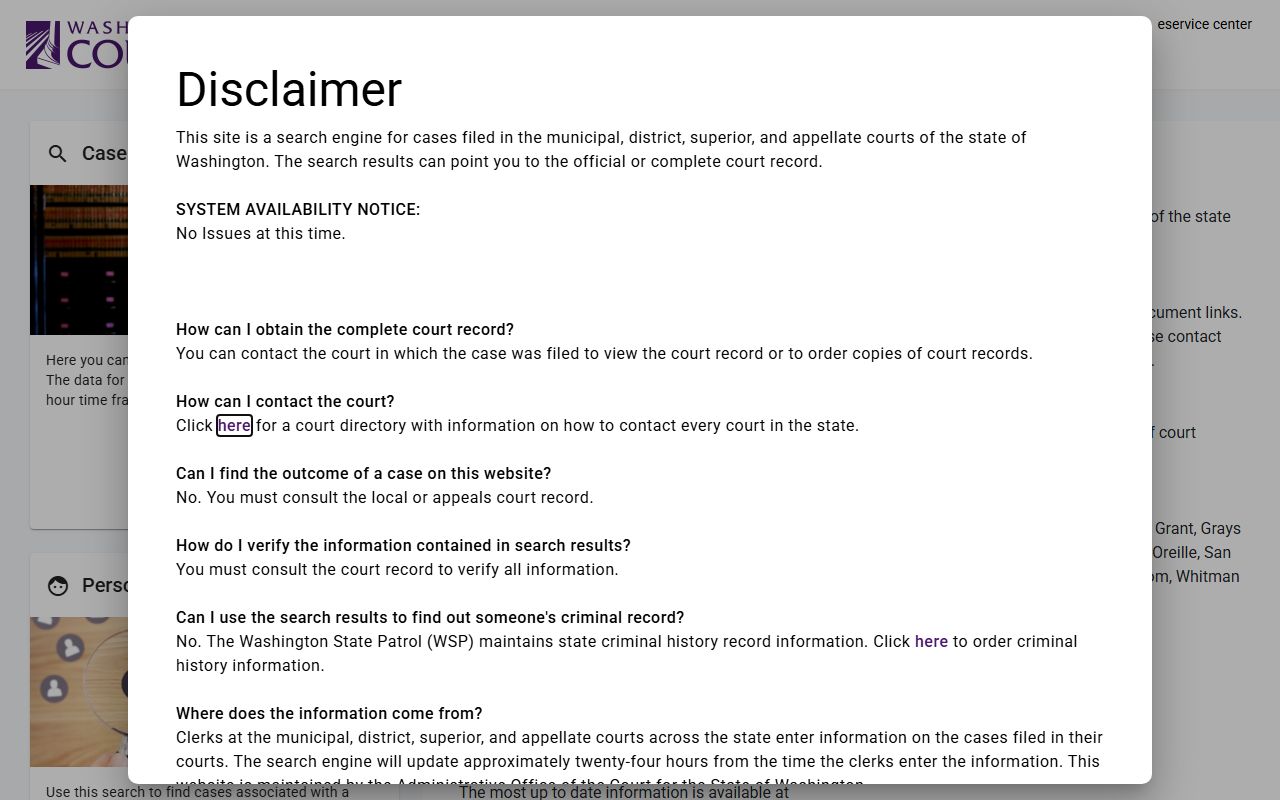
The portal covers cases from municipal courts through the Supreme Court and is available at no cost to the public, though it notes that some case information may not display correctly at all times and that users should contact the court directly for complete records.
For most Superior Courts across Washington, the portal directs users to the Odyssey Portal, which serves Adams, Asotin, Benton, Chelan, Clallam, Clark, Columbia, Cowlitz, Douglas, Ferry, Franklin, Garfield, Grant, Grays Harbor, Island, Jefferson, Kitsap, Kittitas, Klickitat, Lewis, Lincoln, Mason, Okanogan, Pacific, Pend Oreille, San Juan, Skagit, Skamania, Snohomish, Spokane, Stevens, Thurston, Wahkiakum, Walla Walla, Whatcom, Whitman, and Yakima counties. King County Superior Court uses a separate portal at dja-prd-ecexap1.kingcounty.gov. Pierce County Superior Court uses linxonline.co.pierce.wa.us. Seattle Municipal Court cases are accessible at courtrecords.seattle.gov. Spokane Municipal Court uses ecourt.spokanecity.org.
To search criminal court records online, you typically need the full name of a party involved, the court or county where the case was filed, and a case number or approximate filing date if you have one. The portal is free and gives you basic case details including party names, case status, and docket entries. For certified copies or the full case file, you need to contact the clerk at the specific court.
Several courts use the Tyler Technologies system at researchwa.tylerhost.net, which serves Asotin District, Columbia District, Douglas District, Franklin District, Garfield District, Whitman District, Cheney Municipal, East Wenatchee Municipal, Colfax Municipal, Fircrest Municipal, Ruston Municipal, and Tacoma Municipal Courts.
Note: The statewide case search portal should not be used to determine someone's complete criminal record. For official criminal history, use the Washington State Patrol's WATCH system or contact WSP directly.
Washington State Patrol Criminal History Records
The Washington State Patrol Identification and Background Check Section maintains the state's central criminal history repository, the Washington State Identification System (WASIS).
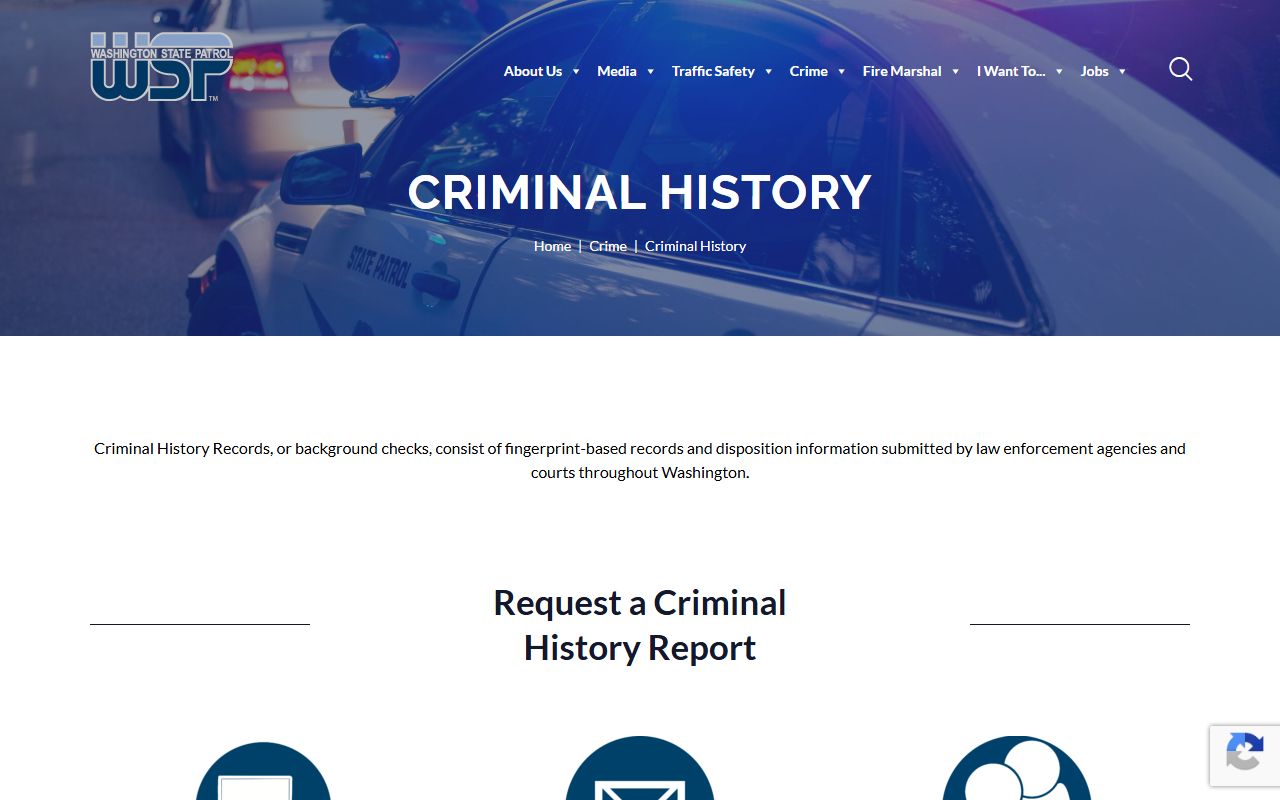
WSP is located at 106 11th Ave. SW, Suite 1300, Olympia, WA 98501, and can be reached at (360) 534-2000 for questions about criminal history records and background check procedures.
The WATCH (Washington Access to Criminal History) system lets you run name-based criminal history background checks online with immediate results. The fee is $11.00 per search, payable by Visa, MasterCard, or American Express. WATCH searches provide conviction records, pending criminal charges, and arrests less than one year old with pending dispositions. The system is linked by fingerprints rather than name alone, which makes results more accurate than simple name searches. Non-conviction information older than one year is not included in public results.
If you need a mail-in request based on name and date of birth, the fee is $32.00 payable by check, money order, or bankcard authorization. You submit a completed Request for Conviction Criminal History Form to WSP. Fingerprint-based criminal history requests by mail cost $58.00 and require a full set of fingerprints. In-person requests at the Olympia office cost the same as mail-in requests and can be paid by cash, check, or credit card. WSP provides fingerprinting services at its Olympia office Monday through Friday, 8:00 a.m. to 5:00 p.m., with a break from noon to 1:00 p.m., for a fee of $16.00.
When a conviction is vacated in Washington court, the record is updated to show "vacated" rather than "guilty" and is no longer shared with the public. However, the FBI still includes vacated records in fingerprint-based federal background checks. WSP processes court orders for juvenile seals, vacates, deletions, dismissals, certificates of discharge, and restoration of firearm rights. These orders may be faxed, emailed, or mailed to WSP for processing.
Washington Department of Corrections Offender Search
The Washington State Department of Corrections provides a free public offender search tool for individuals currently incarcerated in state facilities or under community supervision.
The DOC Offender Search is available without registration or fees, and its records date back to the 1920s, though data quality varies for records prior to 2008.
The search tool shows conviction information, sentence details, current custody location, or supervising office for each offender. You can verify whether someone is currently incarcerated, on community supervision, or has completed their sentence. Community supervision records include supervision level, reporting requirements, and compliance information. The system updates regularly to reflect current status. For research, background checks, or verifying sentence completion, it is a useful starting point alongside court records.
Legal Framework for Criminal Records in Washington
The Revised Code of Washington (RCW) is the compilation of all permanent laws in the state and is the legal foundation for how criminal court records are created, maintained, and accessed.
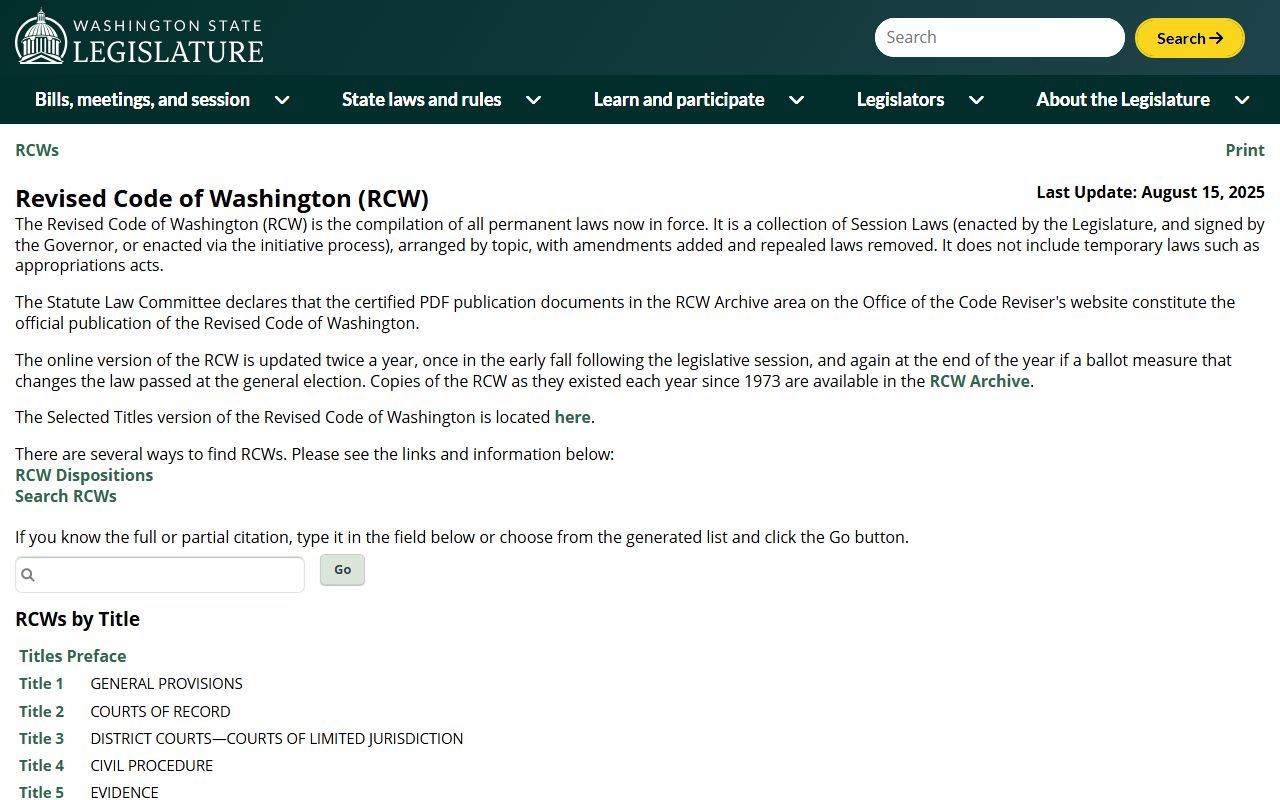
The RCW is updated twice a year and is available online in full, with copies of each year's version going back to 1973 archived and accessible to the public.
Several RCW titles govern criminal records directly. Title 9A contains the Washington Criminal Code, establishing substantive criminal law across the state. Title 10 covers Criminal Procedure, governing how cases proceed from arrest through appeal. Under RCW Chapter 10.97, the Washington State Criminal Records Privacy Act sets rules for collecting, maintaining, and sharing criminal history record information. This statute draws a key distinction between conviction records and non-conviction data, limiting what can be shared publicly for older non-conviction records.
RCW Chapter 42.56 is the Public Records Act. It mandates that all public records maintained by state and local agencies be made available to the public, with only narrow statutory exemptions. The Act states that "the people of this state do not yield their sovereignty to the agencies that serve them" and that records must stay open so citizens can hold government accountable. RCW 42.56.010(3) defines a public record broadly to include any writing prepared, owned, used, or retained by a government agency that relates to government conduct.
Title 13 of the RCW covers juvenile courts and juvenile offenders. RCW Chapter 13.50 establishes that juvenile criminal court records are generally confidential, with limited exceptions for victims, immediate family members, and criminal justice agencies. RCW 40.14 sets retention schedules, requiring that agencies retain records for specified periods depending on content and function. RCW 40.16.010 and 40.16.020 make the intentional destruction of public records a criminal offense.
Your Right to Access Criminal Court Records
Washington's Public Records Act, codified at RCW Chapter 42.56, creates a strong presumption of public access to government records, including criminal court records.
No official format is required for making a records request under RCW 42.56.080, though agencies may offer their own request forms to help structure submissions.
All criminal court records in Washington are accessible to the public except those restricted by court orders and state or federal statutes. You do not need to be a party to the case. You do not have to give a reason for your request. In district or municipal courts, the court administrator handles records. In Superior Courts, the county clerk provides records. For the Supreme Court or Court of Appeals, the appellate court clerk is responsible. When an agency withholds or redacts any portion of a record, it must identify the specific statute that exempts it and explain how that statute applies. Agencies may not charge for time spent redacting records, with a narrow exception for body camera video footage under RCW 42.56.240(14).
Juvenile criminal court records are generally confidential under RCW 13.50. When juvenile records are sealed or expunged, identifying information including name, date of birth, address, fingerprints, photographs, and physical characteristics remains open to public access. Only the victim of a crime and immediate family may obtain the identity of a minor involved in a case. Third-party research websites may also have access to some publicly available records, but they operate independently with no government affiliation and their record availability may differ from official channels.
Historical Criminal Records at the Washington State Archives
The Washington State Archives maintains historical court records and provides records management guidance for state and local agencies across the state.
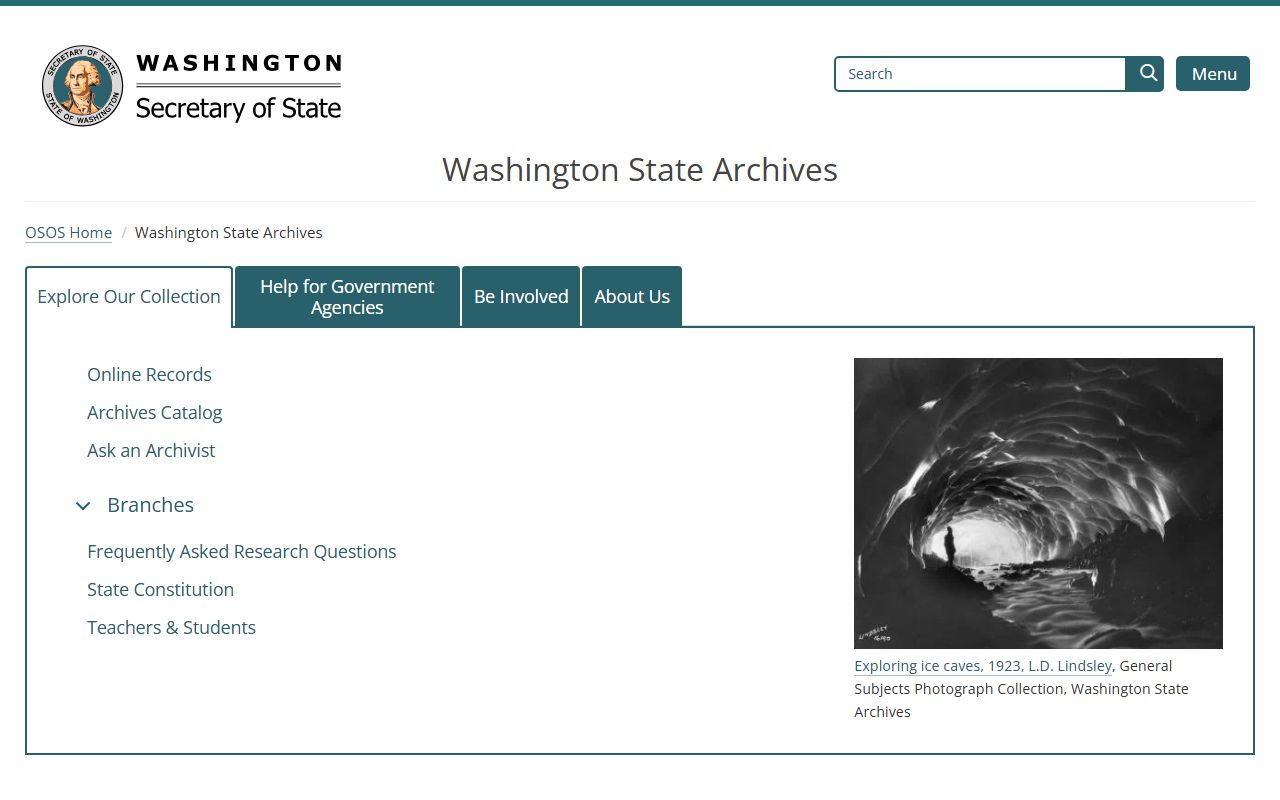
The Archives operates multiple regional branches to serve researchers: a Central Regional Branch, an Eastern Regional Branch at Eastern Washington University in Cheney (509-359-6900), a Northwest Regional Branch, a Puget Sound Regional Branch, and a Southwest Regional Branch.
The Digital Archives at digitalarchives.wa.gov contains scanned historical records including court records, naturalization records, probate records, and older divorce and marriage records. Court records available through the Archives include naturalization filings, probate matters, and select county records predating 1968. These collections are valuable for genealogical research and historical investigations into past criminal cases. The Archives is the authoritative resource for records that predate electronic case management systems.
Under RCW 40.14, state and local agencies must retain records for different lengths of time depending on their content, function, and purpose. If a public records request is made when a record exists but is scheduled for destruction under a retention schedule, the agency cannot destroy that record until the request is resolved, per RCW 42.56.100. The Archives tracks and logs public records requests and reports those metrics to the Joint Legislative Audit and Review Committee.
Legal Resources and Bar Association Help
The Washington State Bar Association provides resources for anyone seeking legal help with criminal records, court proceedings, post-conviction relief, or record sealing in Washington.
The WSBA Service Center can be reached at 1-800-945-9722 or (206) 443-9722 for referrals to attorneys handling criminal defense, appeals, and related matters.
The Washington State Law Library maintains extensive legal research collections including the full RCW, Washington Administrative Code (WAC), court rules, and Washington case law. The library's Digital Resources Hub provides online access to legal databases and research tools. Its Ask a Librarian service offers guidance on locating court records and legal documents. The library also maintains collections of Washington Attorney General opinions that interpret public records and court procedure law.
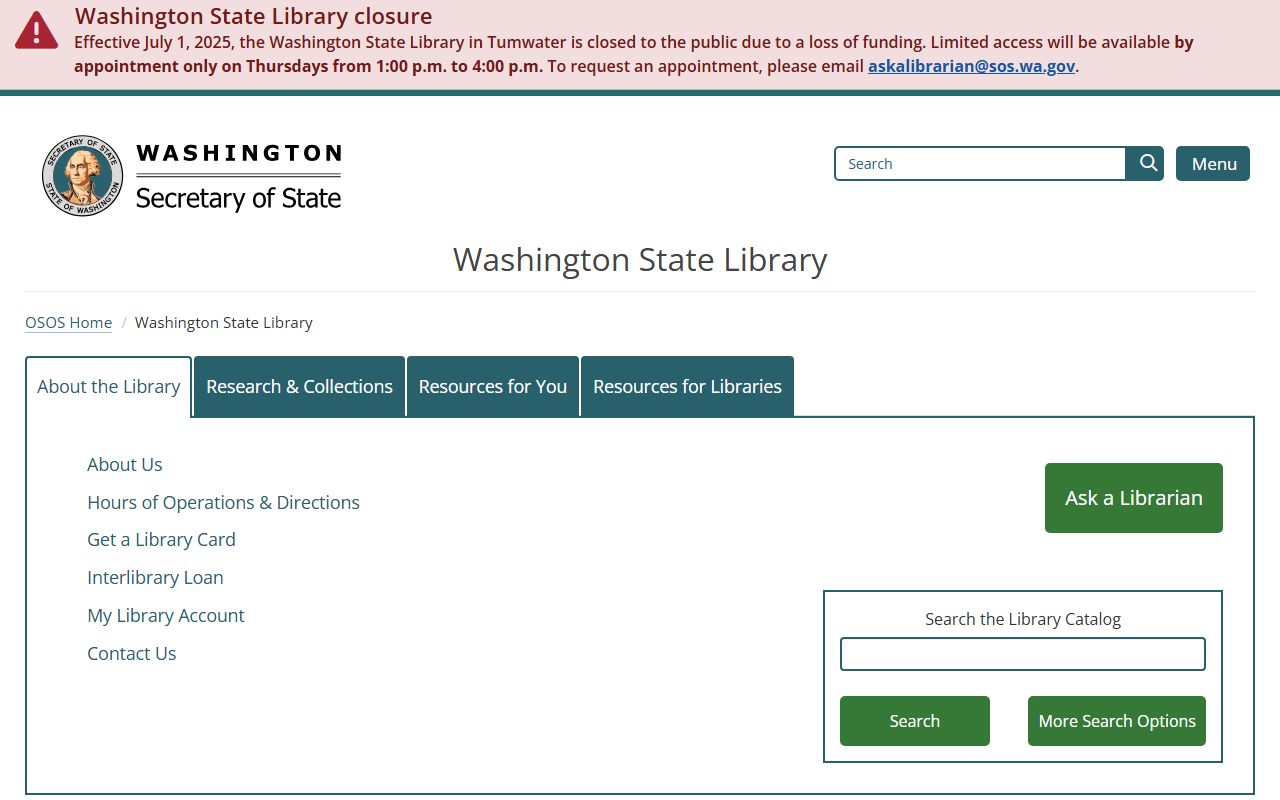
The State Law Library coordinates with county law libraries statewide to ensure access to legal resources across the entire court system.
WSBA resources include information about sealing records, expunging juvenile matters, vacating convictions, and other post-conviction remedies available under Washington law. The Bar Association maintains a directory of attorneys who specialize in criminal defense, appellate practice, and related legal fields. For those seeking free or reduced-cost help, the WSBA website at wsba.org/for-the-public/find-legal-help lists legal aid programs serving low-income residents throughout the state.
Note: Washington specialty courts, also known as problem-solving courts, include Drug Court, Mental Health Court, Veterans Therapeutic Court, DUI Court, and others. These focus on treatment and rehabilitation alongside criminal court proceedings.
Law Enforcement Records and Criminal Court Records
The Washington Association of Sheriffs and Police Chiefs (WASPC) coordinates with the Washington State Patrol, prosecutors, and courts on consistent practices for records management and public disclosure of criminal history information.
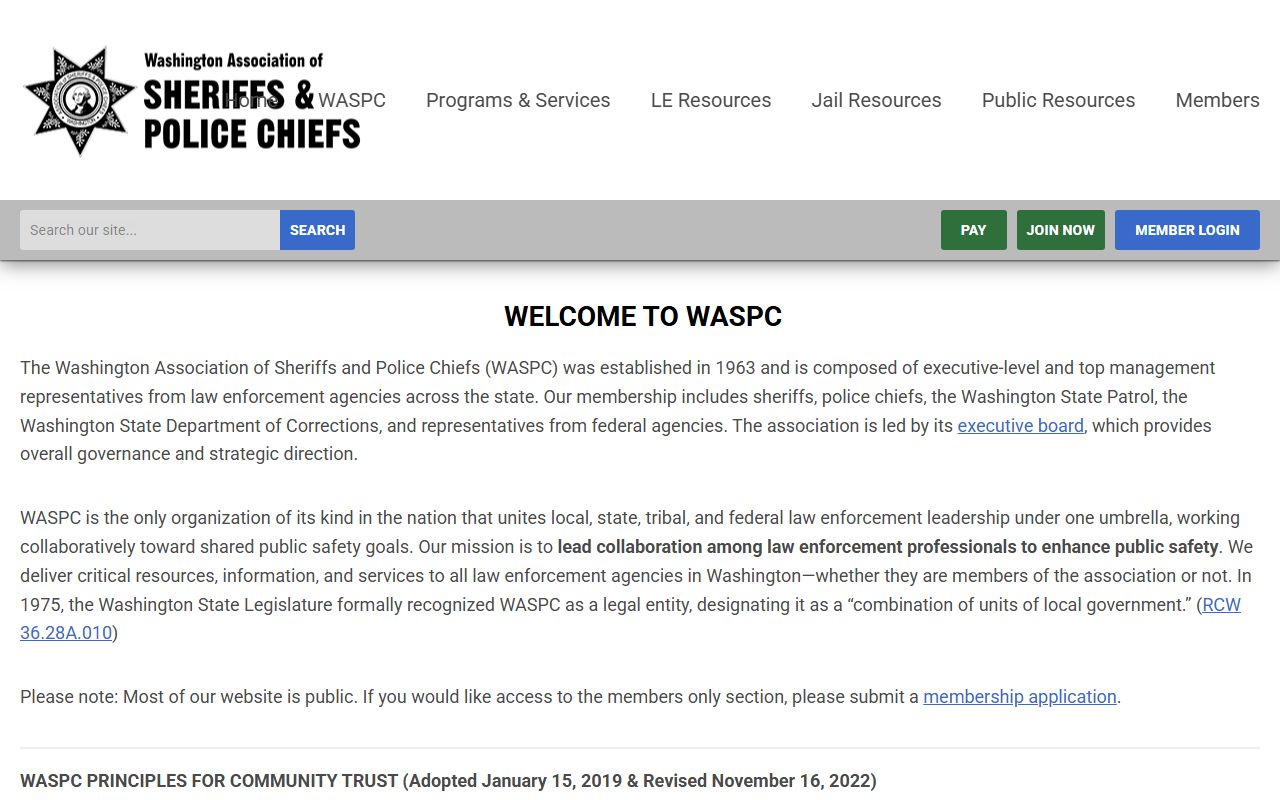
WASPC maintains legal updates on court decisions affecting public access to law enforcement records, including significant cases interpreting the Public Records Act and criminal records privacy laws.
Criminal court records and law enforcement records are related but different. When police arrest someone, they submit fingerprint-based arrest information to the Washington State Patrol for inclusion in WASIS. That arrest then connects to any prior criminal history tied to those fingerprints. When the prosecuting attorney files charges, the case becomes a court record maintained by the court clerk. Sheriff's offices and police departments maintain their own incident reports and arrest logs separately from court records. Both types may be requested, but through different offices with different processes and fees.
Disciplinary records that reflect substantiated allegations of employee misconduct in law enforcement are not exempt from public disclosure and must be released upon request. Active investigation records may be temporarily withheld under the PRA, but once an investigation closes, those records generally become accessible. Each agency follows state retention schedules that determine how long different record types are kept before destruction is permitted.
Browse Washington Criminal Court Records by County
Each of Washington's 39 counties has its own Superior Court Clerk who maintains felony criminal case files. Pick a county below to find local court contact information, search portals, and resources for criminal court records in that area.
View All 39 Washington Counties
Criminal Court Records in Major Washington Cities
Residents of major cities file criminal cases at the Superior Court or District Court in their county. Municipal courts also handle city ordinance violations and misdemeanors within city limits. Pick a city to find the courts that handle criminal records in that area.